P1/P2 - Know how to use camera equipment to record cinematic quality footage
Introduction
For this document, I'll be listing different equipment and explaining their uses and advantages/disadvantages of the said equipment. I'll also talk about the camera settings and what the different types can do to help with filming. For the equipment section, I'll be addressing three different types of equipment with there being three different types of variations.
Camera Types
I'll be looking into these types of camera: Canon DSLR, Smartphone Camera, Drone
Canon DSLR
A DSLR is a handheld camera that can be used for either photos or photos. It comes with multiple different modification which can be made to better suit the filming and help you aim for your desired style of filming.

One of the changes you can make to a camera is changing its lens. This not only helps perhaps capture more within a shot or change the feel and mood of the film, but can also allow for higher quality image which can allow you to zoom in more or just have a crisp image. You could also attach a mic or a light onto the camera for either better audio or support light for it to help you achieve a certain lighting technique. The last thing you can apply to a camera is its built in settings. There are many settings ranging from changing the contrast of the image, change the brightness of the shot or even change the FPS of the camera. The camera can be also attached onto the tripod for a still shot or you could just hold it and use it but could make the shot wobbly unless you're able to hold still.
These are most of the advantages of the camera but it also comes with some disadvantages which can be difficult to overcome for some. Since if you need any extras like tripod, light, mic or lenses, you'll need to buy them separately unless you have someone to provide with such equipment. Despite the large amount of settings available, an unexperienced person could find it difficult or even pointless to use the settings available which can make some shots stand out more.
Smartphone Camera
A Smartphone is a handheld multitool that has many features built into it. You can call, message, take photos/videos, use other applications etc. For this section, we'll only look into the camera/filming part.

The camera has some similarities to a DSLR as it has a wide range of settings to mess around with which are similar but come with new extra settings that either affect the camera or the phone itself. Another thing that the phone does better than a DSLR camera or Drone is that it's easily portable as it can fit in your pocket and in your hand. It also comes with a built in mic that allows for good audio capture and a flash for making some photos look brighter.
Despite it being portable and having the same settings as a DSLR, it doesn't come with the extra support of new lenses, lights or mics. This limits the person as for lenses it depends on the phone model or brand. Since there isn't a plug of external light, you'll need to get your own lighting equipment to make it. For mic you'll need an audio recording device and a mic suitable for the situation. The tripod for camera can only come in the form of a selfie stick.
Drone
A Drone is a device that allows you to take photos or video footage from high angles or even make pan shots.
.jpeg)
The drone has similar camera settings to DSLR but also eliminates the need for most external equipment. Most drones are steady so they wouldn't need any tripod especially when the drone will be hovering in the air. Since drones will most likely be used for landscape capture and wide shots, lighting will depend only if there is a character or object that needs to be highlighted. The use of the mic will most likely be recorded on the ground and applied later in editing.
Despite eliminating the use of external attachments, it comes at a high price and requires the use of a phone or SD card to download the footage. You'll also need to have experience in flying the drone so it can take some time to practice or find a person with enough experience. There re also some areas that can't have drones flying in the area which can also limit the use of the drone because of it.
Extras
In this section, it will be all about the extra equipment that you could use to aid you in filming with a camera. These will mostly be available for use only if you're using a film camera or any other camera.
Lens
Lens is one of the crucial components of the camera as it determines how good the quality of the shot will be and how much you could capture within the frame. They come in many different sizes and functionalities so it is important to know and research before you go and use said lens. When buying a camera, it comes with its own lens and depending on the camera, the lens will also depend on quality.
Mic
Microphones are a tool used to record audio with a good quality during filming. It can be in different shapes and forms with one of them being the in-build microphone in the cameras. But when recording footage, you would most likely need multiple microphones depending on the environment and what audio you would like to record.
For the camera there is a smaller mic that can be attached to it to allow for better quality of audio compared to the in-built mic. It can be used for videos such as short films or vlogs that don't require too high of a sound quality. Not only is it small and easy to attach but it is easily transportable due to it's size.
Another type of mic can be a on a boom pole which is mostly used to record audio of people talking higher quality with only the person being heard. With the pole being tall it can be used during recordings without it being seen if the person holding it is able to balance it.
Tripod
A tripod is used to help keep a camera in position, this can be used to have the camera either straight or at an angle if wanting a set effect. It can be used alongside a dolly so the camera is kept steady while running on the dolly track
Frame rate
Frame rate, or in short FPS(Frames Per Second), determines how quickly the number of frames will go by. The number of frames also indicate how smooth the quality of the video will be, which with higher frame rate will also mean that the video will last longer.
The standard for smooth video is usually 60 FPS as it is between being smooth and not too fast, but most films tend to stay on 30 FPS. The reason for film makers filming in 30 FPS is to make action scenes look more quick and fluid, which brings it closer to realism.
But the most common place to see FPS rase above 60 is on video games, since it makes the game smoother. The FPS can be changed within the settings and should be available on most cameras, games and phones.
.ISO
ISO is the cameras sensitivity to light with either film or a digital sensor. A lower ISO value means less sensitivity to light, while a higher ISO means more sensitivity. Every camera has a range of ISO, with the lowest number identified as the base ISO (usually around 100). From there, each ISO typically doubles (100, 200, 400, 800, 1600). These numbers, however, can vary your camera might have a base ISO as low as 50 and additional values such as 150 and 300, or 140 and 280.

Aperture
Aperture is the opening in the lens. It is referred to as the 'pupil' of the lens. You can shrink and enlarge the aperture to allow more or less light to access the camera sensor.

Aperture can add depth of field to your photos, which is a blurred background and wonderful focus on the subject, which is very popular for portrait photos. Landscape photographers also use this as it creates sharp photos from a horizon from the nearby foreground.
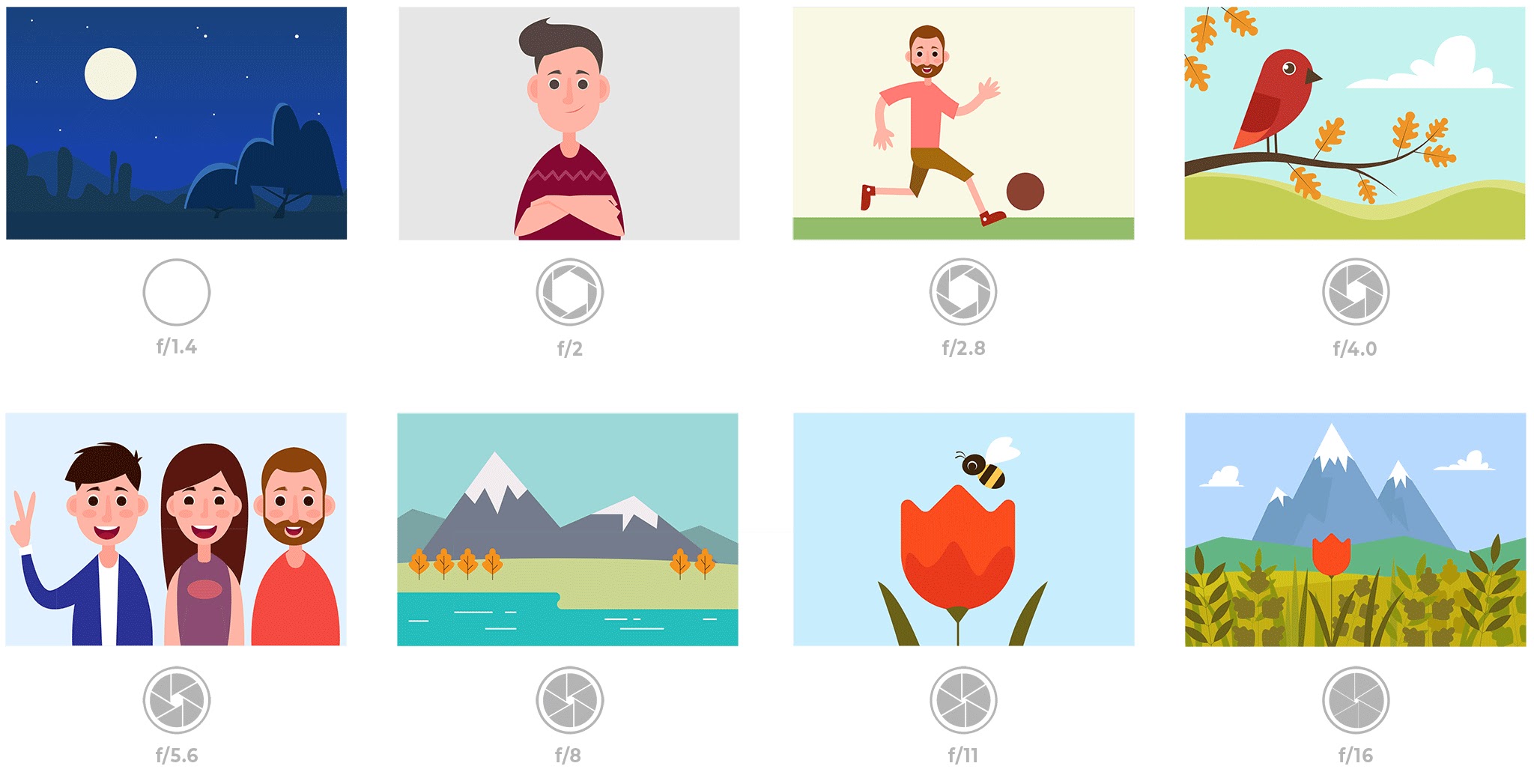
Depth of field is a popular effect, which is how the photograph appears sharp from the front (foreground) to the back (background). Some photos have a thin or shallow depth of field, where the background is completely out of focus, however some have a large depth of field where both the subject and background are completely in focus and sharp.

This photo has a shallow depth of field as the background is completely out of focus. Some cameras can create more background blue however this photo was taken on an iPhone, meaning its aperture can't vary as much as standard DSLR's.
Aperture can also have an effect on the exposure of the image, as aperture changes in size, it alters the overall amount of light that reaches the sensor and therefore effects the brightness of the image.


Коментари
Публикуване на коментар